

Building Smarter Assembly Lines with AI Vision in a Market Racing Towards $230B
Factories are wiring AI into the production floor fast. More than 35% of manufacturers are already using it, and the AI-in-manufacturing market is on track to clear $200B by 2034 at a 44.2% CAGR. The pull is simple: plants want real-time visibility, automated performance tracking, and intelligent alerting across operations, not numbers pieced together after the shift.
INDUSTRY
Manufacturing
LOCATION
United States
SERVICE
Computer Vision & AI Development
SOLUTION
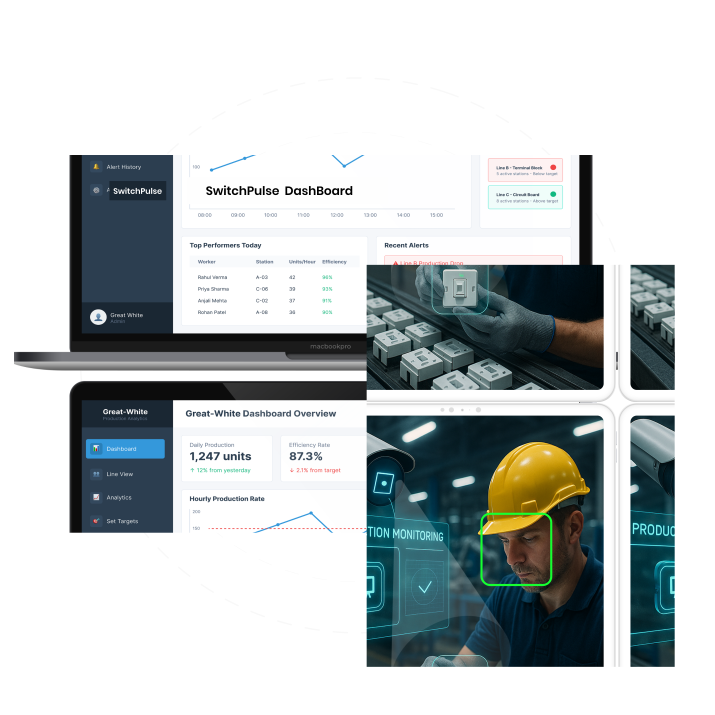
SwitchPulse
VISIBILITY
Real-Time
The Challenge
On a fast-moving assembly line, what you can’t see, you can’t fix in time. For one US switch manufacturer, productivity still hinged on handwritten logs and a supervisor’s eye, which left the numbers late, uneven, and incomplete. By the time a slowdown surfaced in a report, the shift and the chance to do anything about it had already passed.
Numbers written by hand
Manual logs and supervisor observations produced inconsistent, error-prone productivity data across the line.

Blind during the shift
With no real-time visibility, supervisors couldn’t catch slowdowns or bottlenecks mid-shift, so corrective action always came late.

Assembly and packing, worlds apart
The two workflows ran independently, limiting end-to-end insight and quietly hiding production gaps.

No trustworthy worker metrics
Cycle time, idle time, and output at the operator level were either missing or unreliable when teams needed them most.

Reports that arrived too late
Delayed reporting slowed decisions and kept teams reacting after the fact instead of getting ahead of issues.
The BOSC Tech Labs
Approach
The goal was a productivity intelligence platform that felt at home on a fast-moving line. BOSC Tech Labs started on the floor, learning how operators actually work, how supervisors run a shift, and how product flows from assembly through packing, alongside the manufacturer’s own team. That operational research, paired with collaborative planning and precise engineering, kept the focus on sharper visibility without disturbing how the plant already runs.
- Ran on-ground discovery with supervisors and operators to learn daily workflows, performance expectations, and where manual tracking broke down.
- Mapped assembly and packing end-to-end to find where computer vision would land the most accuracy and impact.
- Studied hand movements, assembly steps, workstation setups, and lighting so the vision system would hold up under real-world conditions.
- Tested several vision-model architectures before picking a pipeline tuned for real-time inference, scale, and multi-line rollouts.
- Designed a modular AI layer that reads cycle time, idle time, output count, and micro-activities, without asking workers to change a thing.
- Built dashboards that turn dense vision data into clear, in-the-moment guidance for supervisors.
- Wired in ERP/MES connectors to unify production data and end fragmented reporting.
- Worked in Agile cycles to iterate fast on factory feedback while keeping production schedules intact.
- Kept the system non-intrusive, slipping into the existing setup with minimal hardware changes and room to expand across lines and facilities.
System Architecture Overview
From a single camera frame to a supervisor’s next decision, SwitchPulse runs every workstation through one continuous loop:

Capture
Existing cameras watch each workstation, with no change to how people work

Vision Engine
AI reads hand movements, cycle completions, idle time, and micro-activities

Unify
Assembly and packing events merge into one end-to-end view

Dashboards & Alerts
Supervisors see live performance and get alerts the moment something slips

ERP/MES Sync
Production data flows automatically into the systems already in place
What We Built – Key Features
We built SwitchPulse, an AI-powered productivity intelligence platform that pairs computer vision, hand tracking, and real-time analytics to give assembly and packing lines complete visibility. It was built to sit quietly on top of the floor, as it already runs with no new habits for workers or supervisors, just a sharper view of everything happening. Here’s what it does:
AI Vision System for Real-Time Activity Detection
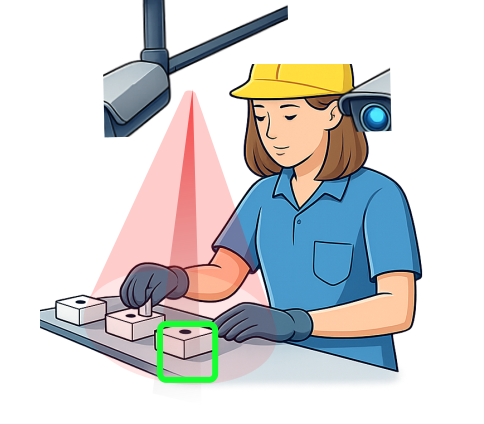
A vision engine pinpoints hand movements, cycle completions, idle periods, and micro-activities, continuously turning raw workstation activity into structured productivity data in real time.
Unified Tracking Across Assembly & Packing
An integrated workflow engine links assembly-line events with packing operations, giving end-to-end visibility into how efficiently items move from production to packaging, with no blind spots in between.
Performance Dashboards for Supervisors
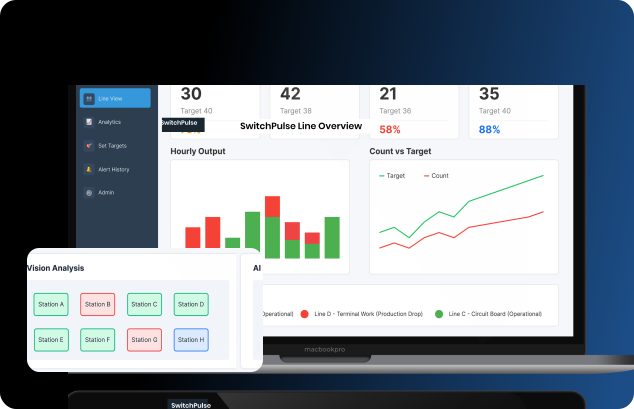
Clear dashboards surface worker activity, workstation output, shift performance, and overall production status, so supervisors can spot delays, idle time, and bottlenecks and act in the moment.
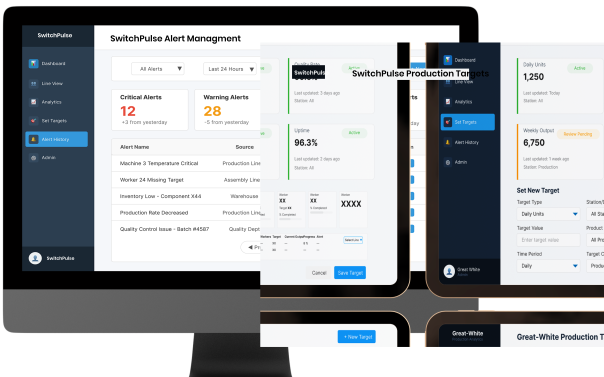
AI-Driven Alerts & Anomaly Detection
Automatic alerts flag slowdowns, unusual activity, extended idle time, and performance drops, helping supervisors step in early and head off productivity losses.
Worker-Level Productivity Analytics
The platform tracks individual performance across shifts and stations, supporting fair evaluation, targeted training, and steady improvement built on unbiased data.
Seamless ERP/MES Integration
SwitchPulse syncs production data straight into ERP and MES systems, keeping records accurate, reporting unified, and manual data entry off the table.
Scalable Deployment Architecture
A modular, scalable architecture supports multiple lines and facilities, so new workstations and production units come online with minimal setup as the manufacturer grows.
Non-Intrusive Implementation
A plug-and-play deployment needs no hardware overhauls or changes to worker behavior, blending into existing lines while adding a powerful intelligence layer on top.

“Before this, I was reconstructing the shift from handwritten logs hours after it ended. Now I can see a line slowing down while it’s happening and fix it before it costs us, and the productivity data my team trusts comes straight off the floor instead of a clipboard.”
— Plant Manager, Manufacturing Client
The Business Impact
| Area | Before Smart Assembly Lines with AI Vision | After Smart Assembly Lines with AI Vision |
|---|---|---|
| Productivity Tracking | Manual logs and uneven supervisor observations led to frequent errors | Automated AI vision produced accurate, real-time productivity data |
| Real-Time Visibility | Performance issues only surfaced after the shift ended | Instant insight into worker activity, slowdowns, and bottlenecks |
| Assembly–Packing Sync | Disconnected workflows created blind spots and reporting gaps | Unified analytics gave end-to-end visibility across both stages |
| Worker-Level Insights | No reliable data on cycle time, idle time, or individual output | Granular, operator-specific metrics for informed coaching and reviews |
| Decision-Making Speed | Delayed reporting slowed interventions and corrective action | Real-time alerts let supervisors act immediately |
| Performance Standardization | Variability across workstations made efficiency hard to measure | Consistent, data-driven metrics standardized performance across lines |
| Operational Efficiency | Teams spent hours reconciling logs and reports | Automated syncing removed manual work and improved accuracy |
| Scalability | Adding new lines meant manual setup and repeated training | Modular architecture made expansion across facilities effortless |
The Impact at a Glance
92%
Reduction in Manual Reporting Effort
89%
Improvement in Data Accuracy
30%
Improvement in First-Time-Right Production
2x
Faster Supervisor Intervention During Shifts
94%
Reduction in Manual Call Handling
85%
Improvement in Appointment Booking
80%
Drop in Customer Hold Times
50%
Less Work
for Staff
See More of Our Work
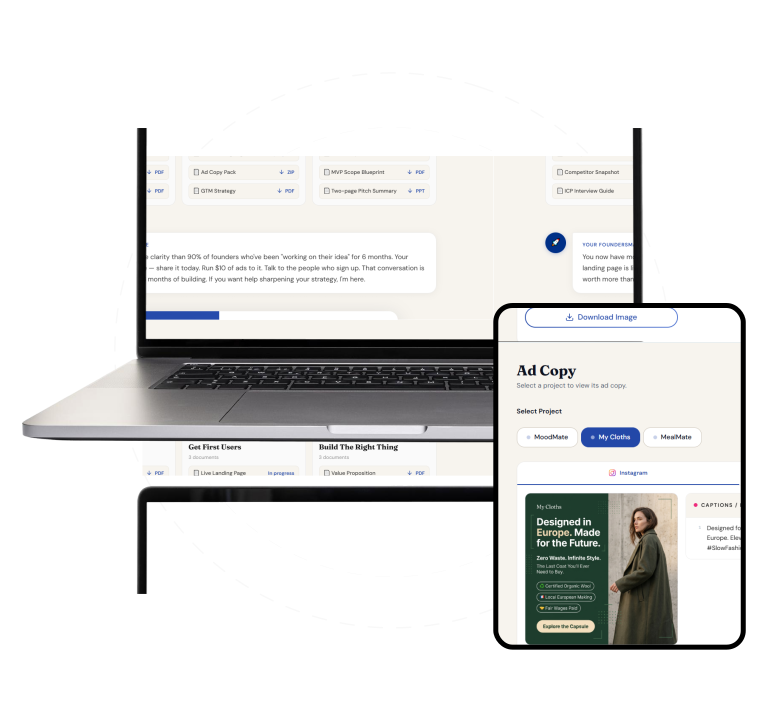
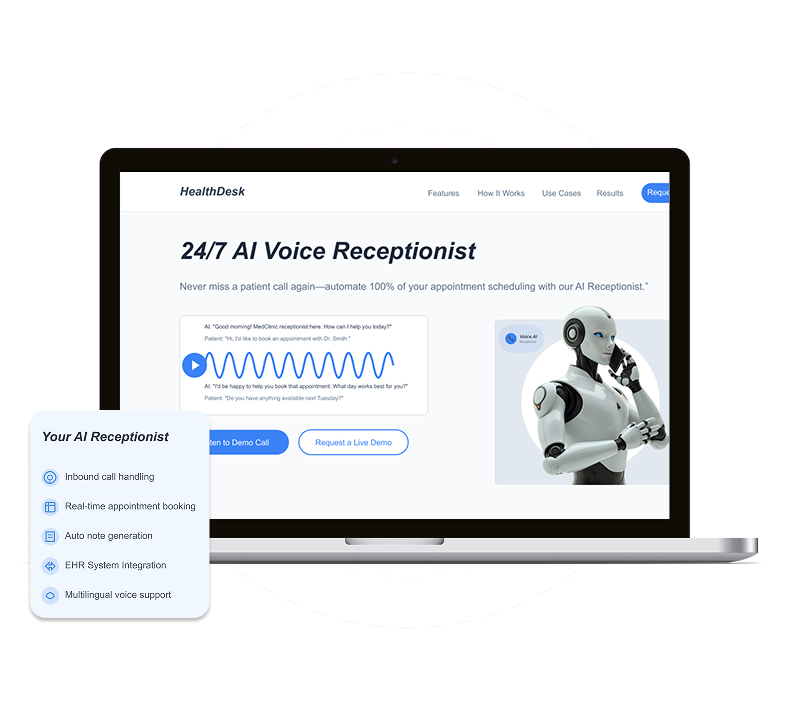
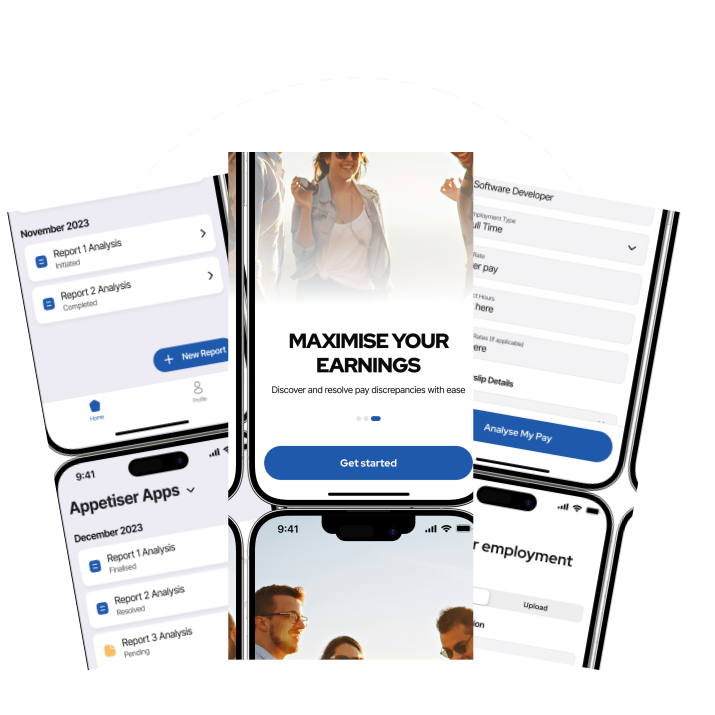
More of what BOSC Tech Labs has built for teams across other industries:

Let’s connect and build a technology that shapes tomorrow
We work with you to turn your complex ideas into scalable, high-performing solutions that create real impact for your business.