

Businesses today rely on software to manage operations, customers, employees, data, and daily workflows. From Project Management Software to customer portals and enterprise applications, businesses use digital tools to improve productivity and manage growing workloads.
However, ready-made software does not always fit every business’s processes or requirements. Custom software development allows businesses to build solutions around their specific workflows, users, integrations, and goals.
In this guide, we’ll explore the types, benefits, challenges, development process, cost factors, and key considerations when choosing a custom software development company.
What Is Custom Software Development?
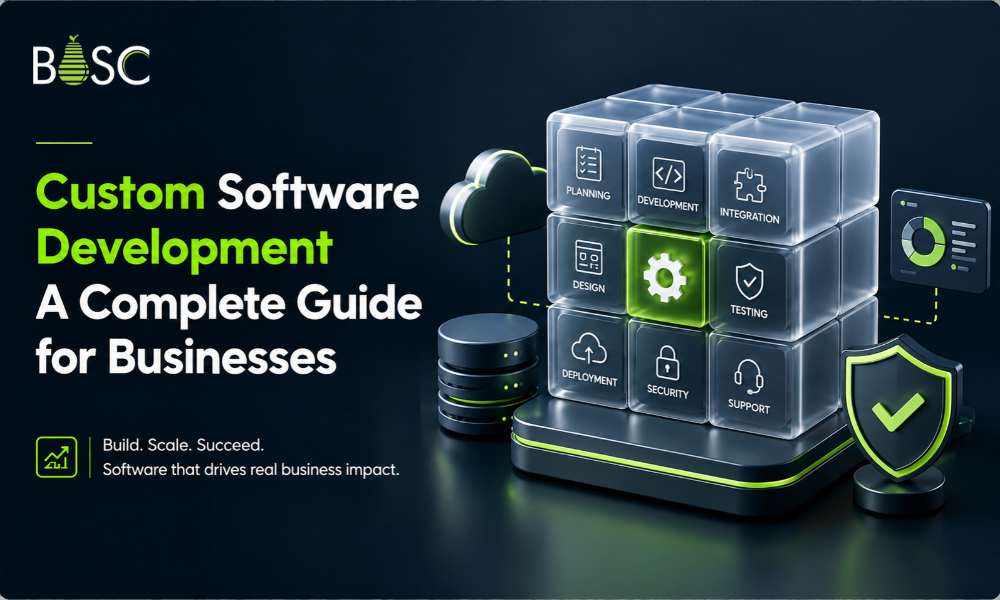
Custom software development is the process of planning, designing, building, testing, deploying, and maintaining software for a specific business, organization, or group of users.
Unlike off-the-shelf software, which is designed for a broad market, custom software is created around specific business requirements.
For example, a company may need an application that connects its CRM, ERP, inventory system, payment platform, customer portal, and reporting tools. If existing software cannot support the required workflow or integrations, a custom application may be a better option.
Custom software can include:
- Web applications
- Mobile applications
- Enterprise software
- Customer portals
- Internal business applications
- SaaS platforms
- E-commerce platforms
- CRM and ERP solutions
- Workflow automation systems
- Data and analytics platforms
- Industry-specific applications
- Legacy modernization solutions
The process normally begins by understanding the business problem rather than selecting technology first. Development teams identify the users, workflows, integrations, security requirements, technical needs, and expected outcomes before defining the software architecture.
When Should a Business Choose Custom Software?
Custom software is not automatically the right choice for every business. Off-the-shelf software can be a practical option when standard functionality meets most business requirements.
Custom development becomes more valuable when existing software creates limitations or when software is an important part of the company’s operations.
1. Your Business Has Unique Workflows
Every organization operates differently.
For example, a manufacturing company may have specific production, inspection, inventory, and approval workflows. A logistics company may need customized delivery, tracking, and dispatch processes.
When standard software forces employees to change established workflows or use manual workarounds, custom software can provide a better fit.
2. You Need Multiple Systems to Work Together
Businesses often use different platforms for sales, finance, inventory, communication, customer management, analytics, and operations.
When these systems do not communicate effectively, employees may need to transfer information manually.
Custom software can connect different applications through APIs and integrations, helping create a more consistent flow of information between systems.
3. Existing Software Cannot Scale With Your Business
A solution that works for a small team may become restrictive as the number of users, customers, locations, transactions, or data increases.
Custom software can be designed around current requirements while considering future workloads, integrations, user roles, and business expansion.
4. You Need Greater Control Over Data
Businesses may handle sensitive customer, financial, operational, or proprietary information.
Custom applications can be designed around specific access controls, authentication requirements, data flows, audit logging, and security policies.
Security should be considered throughout the software development lifecycle instead of being treated only as a final testing step.
5. You Want to Automate Complex Processes
Simple automation can often be handled using existing tools.
However, complex workflows involving multiple systems, approvals, business rules, exceptions, and data sources may require a dedicated software solution.
For example:
Customer Request → Data Validation → Approval → Processing → Notification → Reporting
A custom application can bring these steps together into one controlled workflow.
6. Your Business Needs Specialized Functionality
Some organizations require features that are not commonly available in standard software.
Examples include:
- Industry-specific calculations
- Custom approval systems
- Specialized reporting
- Advanced dashboards
- Unique customer workflows
- Complex pricing rules
- Custom data processing
- Specialized integrations
When these requirements are central to the business, custom development can provide more control over the final solution.
Types of Custom Software Applications
The right type of software depends on the business problem, users, industry, data, and operational requirements.
1. Enterprise Software
Enterprise software supports complex organizations and can connect multiple departments through shared workflows and data.
Common examples include:
- Enterprise resource planning systems
- Customer relationship management platforms
- Supply chain management software
- Human resource systems
- Business intelligence platforms
- Internal workflow applications
2. Custom Web Applications
Custom web applications run through browsers and can support employees, customers, partners, or administrators.
They are commonly used for:
- Customer portals
- Booking platforms
- Business dashboards
- Management systems
- Internal tools
- E-commerce platforms
- SaaS products
3. Custom Mobile Applications
Custom mobile applications provide customers or employees with access to specific services and workflows through smartphones and tablets.
Businesses may use custom mobile applications for:
- Customer engagement
- Field operations
- Employee workflows
- Digital payments
- Booking
- Delivery management
- Healthcare
- Education
- Fitness
- Sports and performance management
4. SaaS Applications
Software-as-a-Service applications are hosted solutions that users access through the internet.
A custom SaaS platform can be designed around a specific target market, business model, pricing structure, user journey, and operational workflow.
5. E-Commerce Software
Custom e-commerce software can support specialized product catalogs, pricing rules, customer accounts, payment flows, inventory management, order processing, and third-party integrations.
It can be useful when standard e-commerce platforms cannot handle important business requirements without extensive customization.
6. Workflow and Automation Software
Workflow software helps businesses digitize repetitive or multi-step processes.
Examples include:
- Approval workflows
- Document processing
- Employee onboarding
- Invoice processing
- Customer support routing
- Order management
- Internal requests
- Compliance workflows
7. Legacy Modernization Solutions
Many organizations continue to depend on older applications because replacing them completely can be disruptive.
Custom development can help modernize these systems gradually by:
- Rebuilding outdated interfaces
- Creating APIs
- Connecting new applications
- Migrating selected data
- Adding modern security controls
- Moving workloads to cloud infrastructure
- Replacing individual modules over time
Benefits of Custom Software Development
Custom software can provide value beyond simply having an application built specifically for a company.
Better Alignment With Business Processes
The software can reflect how teams actually work.
Instead of asking employees to adapt to the limitations of a generic platform, the application can support required workflows, roles, approvals, and business rules.
Improved System Integration
Custom applications can communicate with existing systems through APIs, databases, third-party services, or integration platforms.
This can reduce duplicate data entry and improve information flow between departments.
Greater Scalability
A custom system can be designed around current requirements while leaving room for additional users, features, integrations, locations, and transaction volumes.
Scalability should be considered during architecture planning rather than only after performance issues occur.
More Control Over Features
With custom software, businesses can have greater control over what the application does and how its functionality evolves.
Teams can prioritize features based on actual business needs rather than waiting for a third-party vendor to add a required feature.
Improved Automation
Custom software can automate repetitive activities and connect multiple steps into a single workflow.
This can reduce manual work, improve consistency, and allow employees to focus on tasks that require human judgment.
Better Data Visibility
A centralized application can bring information from different sources into dashboards and reports.
This can help teams monitor operational performance and make decisions using more consistent information.
Stronger Security Control
Custom applications can be designed around the organization’s specific security requirements.
Security measures may include:
- Role-based access control
- Authentication
- Encryption
- Audit logging
- Secure APIs
- Data validation
- Monitoring
- Security testing
Security should be incorporated throughout the development lifecycle rather than treated as an afterthought.
Greater Ownership and Control
Depending on the development agreement, businesses may have greater control over the source code, functionality, integrations, development roadmap, and future improvements.
This can be especially important when software becomes a core part of business operations.
Custom Software vs. Off-the-Shelf Software
The choice between custom and off-the-shelf software depends on the complexity of the business problem, budget, timeline, integrations, and long-term requirements.
| Factor | Custom Software | Off-the-Shelf Software |
| Purpose | Built around specific business requirements | Designed for a broad group of users |
| Customization | Highly customizable | Usually limited to available options |
| Initial investment | Usually higher | Usually lower |
| Development time | Requires planning and development | Can often be used quickly |
| Scalability | Can be designed around future requirements | Depends on the product and vendor |
| Integration | Designed around required systems | Depends on available integrations |
| Feature control | Greater business control | Vendor controls product roadmap |
| Security | Can be designed around business requirements | Depends on the vendor’s security model |
| Maintenance | Requires an internal or external maintenance strategy | Usually managed by the vendor |
| Ownership | Can provide greater control | Usually licensed as a product |
| Best suited for | Unique or complex business workflows | Standard business requirements |
When Is Off-the-Shelf Software Better?
Off-the-shelf software can be a better choice when:
- Your requirements are standard
- You need a solution quickly
- Your budget is limited
- The product already supports your required integrations
- You do not need significant customization
- The vendor provides the required support and security
When Is Custom Software Better?
Custom development may be more appropriate when:
- Your workflow is highly specific
- Existing tools require frequent workarounds
- Multiple systems need to be connected
- Software is part of your competitive advantage
- You need specialized automation
- You require greater control over data and functionality
- Your application needs to evolve with your business
Custom Software Development Process
A reliable custom software development process starts with business requirements and continues through deployment and ongoing improvement.
Step 1: Discovery and Requirement Analysis
The first step is understanding the problem the software needs to solve.
The team identifies:
- Business objectives
- Target users
- Current workflows
- Functional requirements
- Technical requirements
- Integrations
- Data sources
- Security requirements
- Success metrics
A clear discovery phase helps prevent unnecessary features from entering the project.
Step 2: Solution Planning and Architecture
The development team determines how the application should be structured.
This may include decisions about:
- Application architecture
- Backend services
- Frontend technology
- Databases
- APIs
- Cloud infrastructure
- Authentication
- Third-party integrations
- Scalability
- Monitoring
The goal is to create an architecture that supports current requirements without making future changes unnecessarily difficult.
Step 3: UI/UX Design
Designers create the user experience and interface based on the needs of actual users.
Depending on the project, this can include:
- User journeys
- Wireframes
- Prototypes
- Interface designs
- Design systems
- Usability testing
Good UI/UX design should make important workflows easy to understand and use.
Step 4: Development
Developers build the application according to the approved architecture and designs.
Development may include:
- Frontend development
- Backend development
- Database implementation
- API development
- Third-party integrations
- Authentication
- Business logic
- Automation workflows
For complex projects, development can be divided into smaller releases so functionality can be reviewed and validated progressively.
Step 5: Testing and Quality Assurance
Testing verifies whether the software behaves as expected.
Depending on the application, testing can include:
- Functional testing
- Integration testing
- API testing
- Performance testing
- Security testing
- Usability testing
- Regression testing
- User acceptance testing
Testing helps identify functional issues, integration problems, performance bottlenecks, and security weaknesses before the software reaches users.
Step 6: Deployment
Once the application has passed the required testing, it can be deployed to its production environment.
Deployment may involve:
- Infrastructure configuration
- Database migration
- Environment setup
- Security configuration
- Monitoring
- Backup configuration
- User access
- Documentation
- Team training
Step 7: Maintenance and Continuous Improvement
Software development does not end at launch.
After deployment, teams may need to:
- Fix bugs
- Monitor performance
- Apply security updates
- Improve usability
- Add features
- Update integrations
- Optimize infrastructure
- Respond to changing business requirements
Ongoing maintenance helps the application remain useful as business and technology requirements change.
How Much Does Custom Software Development Cost?
There is no single price for custom software development because every project has a different scope.
The final cost can depend on:
Project Complexity
A simple internal dashboard requires significantly less development work than a large enterprise platform with multiple applications and integrations.
Number of Features
More functionality generally means more design, development, testing, and maintenance effort.
Platforms
A web application, mobile application, desktop application, or combination of platforms can have different development requirements.
Integrations
Connecting CRM, ERP, payment, analytics, communication, or third-party systems can increase development complexity.
UI/UX Requirements
Applications requiring advanced user experiences, custom interactions, or multiple user journeys may require additional design and testing.
Security Requirements
Applications that process sensitive information may require additional authentication, encryption, audit logging, security testing, and access controls.
Data Migration
Moving data from legacy applications or spreadsheets into a new system can require analysis, transformation, validation, and testing.
Maintenance
The overall cost of ownership can also include post-launch support, infrastructure, security updates, monitoring, and future improvements.
For these reasons, businesses should evaluate custom software based on total cost of ownership and expected business value, rather than comparing development quotes alone.
How to Choose a Custom Software Development Company
Choosing the right development partner can significantly affect the project’s outcome.
Before selecting a company, consider the following factors.
Technical Experience
Review whether the company has experience with the technologies, integrations, platforms, and architecture required for your project.
Understanding of Your Business Problem
A good development partner should understand the business problem before recommending a technology solution.
Development Process
Ask how the company handles requirements, design, development, testing, deployment, communication, and post-launch support.
Security Practices
Ask how security is incorporated into development, testing, access management, deployment, and ongoing maintenance.
Communication
Clear communication is important throughout the project. Establish how often progress updates, demonstrations, documentation, and feedback sessions will take place.
Maintenance and Support
Clarify who will maintain the software after launch and how bugs, security issues, upgrades, and new features will be handled.
Portfolio and Relevant Experience
Review previous projects that are similar in complexity or business requirements. Relevant experience can provide a better indication of a company’s capabilities than simply looking at the number of projects completed.
Common Challenges in Custom Software Development
Custom software provides flexibility, but businesses should understand the challenges before starting a project.
Unclear Requirements
Poorly defined requirements can lead to scope changes, delays, and unnecessary development.
A discovery phase helps clarify the problem and prioritize requirements.
Scope Creep
New features can gradually expand a project beyond its original objectives.
A clear scope, prioritized roadmap, and change-management process can help control this.
Integration Complexity
Connecting multiple systems can be more complicated than expected because of different APIs, data formats, authentication methods, and business rules.
Data Migration
Legacy data may contain duplicate records, incomplete information, inconsistent formats, or outdated information.
Migration therefore requires planning, validation, and testing.
Security Risks
Security weaknesses can emerge from application code, third-party dependencies, APIs, infrastructure, or incorrect access controls.
Security needs to be part of the development lifecycle rather than an afterthought.
Long-Term Maintenance
A custom application needs an ownership and maintenance strategy after launch.
Businesses should plan for updates, monitoring, infrastructure, security, and future development from the beginning.
Custom Software Development Trends
Technology changes quickly, but several development approaches continue to influence how businesses build and maintain software.
AI-Enabled Software
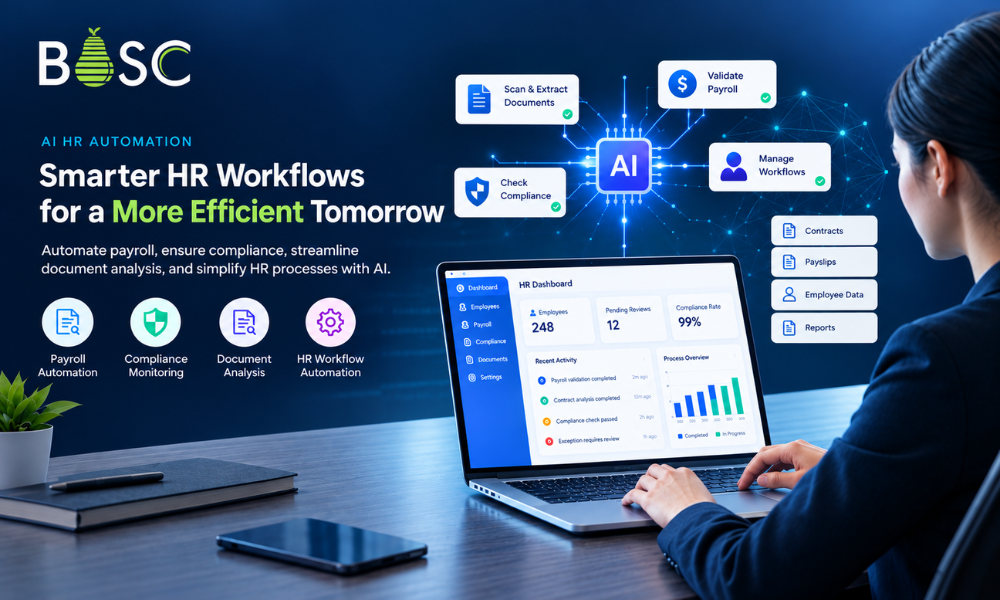
AI is increasingly being integrated into business applications for tasks such as document processing, search, recommendations, classification, forecasting, conversational interfaces, and workflow automation.
The important consideration is not simply adding AI, but identifying where it can provide measurable value within an existing business workflow.
Cloud-Native Development
Cloud infrastructure can provide flexible computing, storage, deployment, monitoring, and scaling options.
Cloud-based architectures can be useful when applications need to support changing workloads or distributed users.
API-First Architecture
APIs allow applications and services to exchange data and functionality.
An API-first approach can make it easier to connect web applications, mobile apps, internal systems, partner platforms, and third-party services.
DevSecOps
DevSecOps brings security practices into development and delivery workflows.
It encourages teams to consider security throughout development rather than waiting until the final stage of a project.
Automation Across the Software Lifecycle
Development teams increasingly use automation for testing, code quality checks, deployment, monitoring, documentation, and other repetitive activities.
The goal is not simply to develop faster, but to improve consistency, quality, and operational reliability.
Legacy System Modernization
Many businesses are modernizing older applications instead of replacing everything at once.
Incremental modernization can allow organizations to improve critical parts of a system while continuing to operate the existing business environment.
Frequently Asked Questions
1. What is custom software development?
Custom software development is the process of creating software specifically for a business or organization’s requirements. It can include planning, design, development, testing, deployment, integration, and ongoing maintenance.
2. What are the main benefits of custom software development?
The main benefits include better alignment with business workflows, greater control over functionality, integration with existing systems, scalability, automation, data visibility, and the ability to build features around specific business requirements.
3. Is custom software better than off-the-shelf software?
Not always. Off-the-shelf software can be better when standard functionality meets your requirements and you need a solution quickly. Custom software can be more suitable when your workflows, integrations, scalability, or functionality requirements are highly specific.
4. How much does custom software development cost?
The cost depends on project complexity, features, platforms, integrations, security requirements, data migration, development team, and ongoing maintenance. A reliable estimate should be prepared after understanding the project’s requirements and scope.
5. How long does custom software development take?
There is no universal timeline. A small application may require significantly less time than a complex enterprise platform. Requirements, number of features, integrations, design complexity, testing, and feedback cycles all affect the development timeline.
Conclusion
Custom software development can help businesses build applications around their actual workflows, users, data, and long-term goals.
It can be particularly useful when ready-made software cannot provide the required functionality, integrations, automation, scalability, or level of control.
The process typically involves discovery, requirement analysis, architecture, design, development, testing, deployment, and ongoing maintenance. A structured approach can help businesses control scope, manage risks, and build software that can evolve with changing requirements.
The right choice is not simply between custom and off-the-shelf software. Businesses should evaluate the problem they are solving, the complexity of their workflows, existing systems, budget, security requirements, scalability needs, and long-term ownership.
If your business needs software built around specific workflows or wants to modernize an existing system, a structured discovery process can help determine whether custom development is the right approach.