

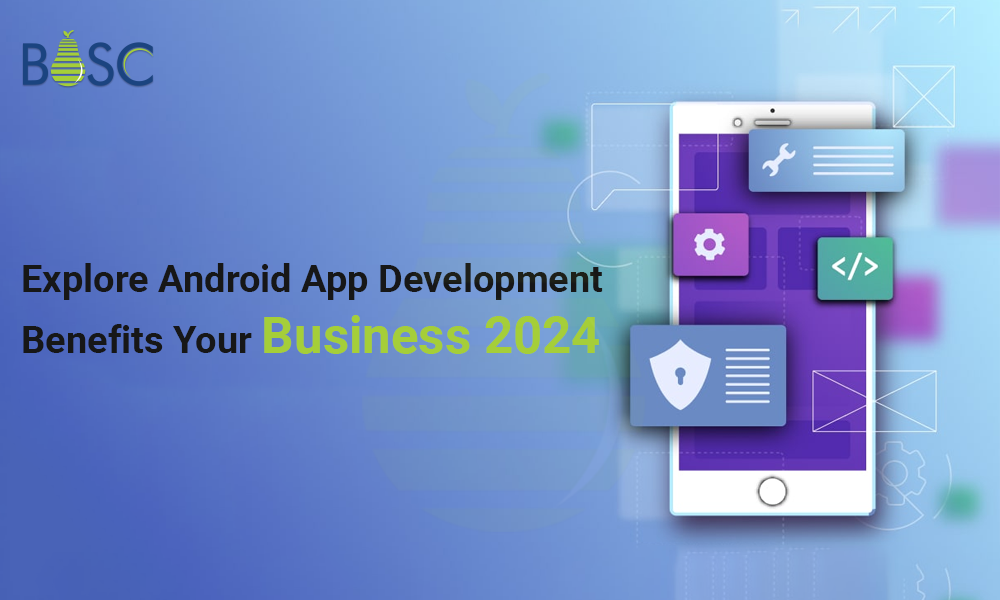
Businesses across industries use mobile applications to connect with customers, simplify operations, deliver services, and create digital products. Android app development can be a practical choice for organizations that want to reach Android users while building an application around specific business and user requirements.
A successful Android application is more than a collection of features. It needs a clear purpose, intuitive user experience, reliable performance, appropriate security controls, and a development approach that supports future updates. Businesses also need to consider device compatibility, integrations, testing, app distribution, analytics, and ongoing maintenance before development begins.
This guide explains the benefits of Android application development, important considerations for businesses, the development process, common use cases, and how to choose the right development approach.
What Is Android App Development?
Android app development is the process of designing, building, testing, deploying, and maintaining applications for devices that run the Android operating system.
Android applications can be created for different types of devices and use cases, including:
- Smartphones and tablets
- Wearable devices
- TV applications
- Enterprise applications
- Customer-facing mobile apps
- E-commerce applications
- Healthcare applications
- Financial applications
- Education platforms
- Media and entertainment apps
- Business and productivity applications
The development process can include UI/UX design, application architecture, frontend and backend development, API integration, database management, testing, deployment, analytics, and maintenance.
Android Studio is Google’s official IDE for Android development and provides tools for coding, testing, debugging, profiling, and building Android applications. It also supports Jetpack Compose, Android Emulator, testing tools, and Android App Bundle workflows.
Why Do Businesses Invest in Android Applications?
Businesses usually invest in mobile applications when they need a direct digital channel for customers, employees, partners, or internal operations.
An Android application can help businesses:
- Provide convenient access to products and services
- Improve customer engagement
- Support mobile-first workflows
- Deliver personalized experiences
- Enable digital payments and transactions
- Connect users with business systems
- Automate repetitive activities
- Collect useful product and user data
- Support location-based features
- Create new digital revenue channels
The value of an app depends on how well it solves a real business or user problem. Simply having a mobile application does not guarantee better engagement or revenue.
Key Benefits of Android App Development
1. Broad Device Reach
Android runs across a wide range of smartphones and other device categories. This gives businesses flexibility when planning applications for different audiences and hardware environments.
However, broad device support also means development teams need to consider different screen sizes, hardware capabilities, Android versions, performance levels, and manufacturer-specific behavior.
A strong development strategy should define the devices and user segments that matter most instead of trying to support every possible device without prioritization.
2. Flexible User Experiences
Android applications can be designed around specific user journeys and business requirements.
For example, an e-commerce application may focus on product discovery, search, checkout, order tracking, and personalized recommendations. A field-service application may prioritize offline access, location services, task management, photo capture, and real-time updates.
The interface should be designed around what users need to accomplish rather than simply adding as many features as possible.
3. Integration With Business Systems
Many business applications need to exchange information with existing systems.
An Android application can integrate with:
- CRM platforms
- ERP systems
- Payment gateways
- Cloud services
- Authentication systems
- Analytics platforms
- Communication tools
- Inventory systems
- Booking platforms
- Custom APIs
API design and integration planning should happen early because external dependencies can affect architecture, development effort, testing, security, and maintenance.
4. Support for Modern Android Development Tools
Android development continues to evolve through improvements in development tools, UI frameworks, testing capabilities, and device support.
Android Studio provides tools for application development, testing, debugging, and deployment. Jetpack Compose also provides a modern approach to building Android user interfaces.
Businesses should focus less on using every new technology and more on selecting tools that support the application’s actual requirements.
5. Location and Device Features
Android applications can use device capabilities when they are relevant to the product.
Depending on permissions and the application design, these can include:
- GPS and location
- Camera
- Microphone
- Bluetooth
- Notifications
- Biometrics
- Sensors
- File and media access
These features can support applications such as delivery platforms, fitness apps, field-service solutions, navigation products, healthcare applications, and logistics systems.
However, device permissions should be requested only when necessary and explained clearly to users.
6. Support for Business Automation
Mobile applications can also become part of larger business workflows.
For example, an employee application can allow staff to submit requests, update records, upload documents, complete inspections, or receive notifications without depending on desktop systems.
Android applications can also connect with backend automation, cloud services, analytics systems, and AI-powered functionality when there is a clear business use case.
For businesses exploring AI-powered mobile experiences, AI App Development can be considered as part of the broader product strategy.
7. Scalable Product Development
A mobile application should be planned with future changes in mind.
A scalable architecture makes it easier to add features, integrate new services, support growing user numbers, improve performance, and maintain the application over time.
Scalability does not mean building every possible feature from the beginning. A better approach is to establish a strong foundation and expand the product based on user feedback and business priorities.
Android App Development vs Cross-Platform Development
Android is not always the only option. Businesses should compare native Android development with cross-platform approaches before selecting a technology strategy.
| Factor | Android Development | Cross-Platform Development |
| Target platform | Primarily Android | Multiple platforms |
| Native capabilities | Strong access to Android features | Depends on framework and integration |
| Code sharing | Limited when building separately for other platforms | Higher code reuse |
| Platform-specific optimization | Strong | May require additional native work |
| Development strategy | Best when Android is the primary focus | Useful when multiple platforms are required |
| Maintenance | Focused on Android application | Shared codebase can simplify some updates |
The right approach depends on the target audience, product requirements, development resources, performance expectations, device features, and long-term roadmap.
Android App Development Process
A structured development process helps reduce technical risks and keeps the product aligned with business goals.
1. Discovery and Requirement Analysis
The first step is understanding the business problem and defining what the application needs to accomplish.
This stage may include:
- Target audience identification
- Business goals
- User journeys
- Feature requirements
- Technical requirements
- Integrations
- Security considerations
- Platform requirements
- Success metrics
Clear requirements help the development team estimate effort and identify technical dependencies before implementation begins.
2. UI/UX Design
The design stage defines how users interact with the application.
It typically includes:
- User flows
- Wireframes
- Prototypes
- Interface design
- Navigation structure
- Accessibility considerations
- Responsive layouts
Good mobile UX reduces unnecessary steps and makes important actions easy to discover.
3. Architecture and Technology Planning
The development team selects an architecture and technology stack based on the application’s requirements.
Important considerations include:
- Application architecture
- Backend requirements
- Database structure
- APIs
- Authentication
- Third-party services
- Cloud infrastructure
- Security
- Scalability
- Monitoring
The goal is not to choose the most popular technology. The goal is to choose a reliable technology foundation for the product.
4. Application Development
Developers then build the application based on the approved requirements and designs.
Development may include:
- Frontend implementation
- Backend development
- API integration
- Database integration
- Authentication
- Notifications
- Payment integration
- Third-party services
- Analytics
- Device-specific functionality
Development is usually performed in iterations so that features can be tested and reviewed throughout the project.
5. Testing and Quality Assurance
Testing should happen throughout development rather than only before launch.
Important testing areas include:
- Functional testing
- UI testing
- Device testing
- Compatibility testing
- Performance testing
- Security testing
- Network testing
- API testing
- Usability testing
Android applications may need to be tested across different screen sizes, device configurations, and supported Android versions.
6. Deployment
After testing and approval, the application can be prepared for distribution.
Android App Bundle is a publishing format supported by Google Play and other app stores. It allows app distribution systems to generate optimized APKs for different device configurations.
The deployment process can include application signing, store listing preparation, privacy information, screenshots, testing tracks, release configuration, and monitoring.
7. Maintenance and Continuous Improvement
Launching the application is not the end of development.
Post-launch work can include:
- Bug fixes
- Security updates
- Performance improvements
- Compatibility updates
- Feature enhancements
- Analytics review
- Infrastructure updates
- User feedback implementation
Regular maintenance helps the application remain reliable as devices, operating systems, third-party services, and user expectations change.
Important Features to Consider in an Android Application
The right features depend on the application’s purpose. Common functionality may include:
User Authentication
Applications may use email, phone-based authentication, social login, or other identity mechanisms depending on the product.
Push Notifications
Notifications can help users receive relevant updates about orders, appointments, messages, tasks, or other activities.
Payment Integration
E-commerce and service applications may integrate payment gateways to support digital transactions.
Location-Based Features
Location functionality can support delivery tracking, navigation, field services, local search, and other location-aware experiences.
Offline Functionality
Some applications need to remain useful when network connectivity is limited. Offline support can be especially valuable for field workers and applications used in areas with inconsistent connectivity.
Analytics
Analytics can help businesses understand how users interact with the application and identify areas for improvement.
AI-Powered Features
AI can be useful when an application needs capabilities such as recommendations, conversational support, document analysis, personalization, forecasting, or intelligent automation.
The AI feature should solve a clear problem rather than being added only as a technology trend.
Security Considerations for Android Applications
Security should be considered from the beginning of the project.
A secure application may require:
- Secure authentication
- Authorization and access control
- Encryption
- Secure API communication
- Safe data storage
- Input validation
- Dependency management
- Vulnerability testing
- Secure logging
- Monitoring
- Regular security updates
Applications handling financial, healthcare, personal, or business-sensitive information may require additional security and compliance controls.
Security requirements should be discussed during planning rather than added only before launch.
Common Android App Development Use Cases
Android applications can support many types of business and consumer products.
E-commerce
Businesses can use mobile applications for product browsing, search, checkout, payments, order tracking, and customer engagement.
Healthcare
Healthcare applications can support appointment scheduling, patient communication, health records, remote services, and other workflows depending on regulatory and security requirements.
Education
Educational apps can provide courses, assessments, learning resources, communication, and progress tracking.
Logistics and Delivery
Mobile applications can support delivery assignments, GPS tracking, route information, proof of delivery, and real-time status updates.
Finance
Financial applications can provide account access, transactions, notifications, reporting, and other services with appropriate security controls.
Media and Entertainment
Applications can deliver video, audio, content discovery, subscriptions, personalization, and social features.
Enterprise and Field Services
Businesses can use Android applications for employee workflows, inspections, task management, inventory, reporting, and communication.
How to Choose an Android App Development Partner
Choosing a development partner requires more than comparing hourly rates.
Consider the following:
Relevant Experience
Look for experience with applications similar to your product, industry, users, or technical requirements.
Technical Expertise
Evaluate the team’s knowledge of Android development, backend systems, APIs, databases, cloud infrastructure, testing, and security.
Portfolio
Review previous projects to understand the company’s approach to product design, development complexity, integrations, and user experience.
Development Process
Ask how the team handles discovery, planning, design, development, testing, deployment, communication, and change requests.
Security Practices
Understand how the company approaches authentication, data protection, API security, testing, monitoring, and updates.
Post-Launch Support
Clarify what happens after launch, including bug fixes, updates, performance monitoring, compatibility work, and new feature development.
Communication
A strong development relationship requires clear communication, documentation, regular progress updates, and defined responsibilities.
How Much Does Android App Development Cost?
There is no single price for building an Android application.
The cost depends on factors such as:
- Number and complexity of features
- UI/UX requirements
- Backend development
- Third-party integrations
- Payment functionality
- Security requirements
- AI or data functionality
- Device and OS support
- Testing requirements
- Development team
- Maintenance and support
A simple business application will usually require a different level of effort than a large platform with multiple user roles, integrations, real-time functionality, and complex backend infrastructure.
Instead of choosing a development partner based only on the lowest estimate, businesses should compare the scope, technical approach, deliverables, testing, support, and long-term value included in the proposal.
Android App Development Best Practices
A reliable Android application should be designed with long-term usability and maintainability in mind.
Some important practices include:
- Start with clear business and user requirements
- Keep the user experience simple
- Use an architecture appropriate for the product
- Test across relevant devices and screen sizes
- Minimize unnecessary permissions
- Protect sensitive data
- Monitor application performance
- Plan for accessibility
- Keep dependencies and libraries maintained
- Use analytics responsibly
- Build a maintainable codebase
- Plan for post-launch improvements
Android development tools continue to evolve, so development teams should also monitor platform changes and update their applications when required.
Frequently Asked Questions
1. What is Android app development?
Android app development is the process of designing, building, testing, deploying, and maintaining applications for Android-powered devices. It can include UI/UX design, backend development, APIs, databases, integrations, security, testing, and ongoing support.
2. What are the benefits of Android app development for businesses?
Android applications can help businesses reach mobile users, improve customer engagement, support digital services, automate workflows, integrate with business systems, and create new mobile-first experiences.
3. How long does it take to develop an Android app?
The development timeline depends on the application’s features, complexity, design requirements, integrations, backend systems, testing needs, and team structure. A simple application may require considerably less effort than a complex enterprise or consumer platform.
4. How much does Android app development cost?
Android app development costs vary according to features, UI/UX complexity, backend requirements, integrations, security, testing, development resources, and ongoing maintenance. A detailed estimate should be prepared after understanding the project scope.
5. How do I choose the right Android app development company?
Look for relevant experience, technical expertise, a strong portfolio, clear development processes, security practices, transparent communication, realistic estimates, and reliable post-launch support. The right partner should understand your business objectives as well as the technical requirements of the application.
Conclusion
Android applications can support customer engagement, digital services, business automation, and mobile-first product strategies across many industries. However, successful development depends on more than choosing a platform.
Businesses should start with a clear problem, understand their users, define the required features, select an appropriate technology approach, and plan for security, testing, deployment, and long-term maintenance.
A well-planned application can evolve as business requirements and user expectations change. For businesses that need help with product strategy, application development, integrations, or AI-powered mobile experiences, working with an experienced technology partner can make the development process more structured and scalable.
Looking to build an Android application around your business requirements? Contact BOSC Tech Labs to discuss your project and explore the right development approach.